Author’s Note: ‘Aberconwy Fable’ was originally published in the Bel Espirit Newspaper. I am a frequent writer for their magazine, based in Portland, Oregon, and spearheaded by Emily Menges.
Down the hill my egg fell open to reveal a perfect ball;
green like a grape and as solid as my skull.
When we drank the salt, a witch appeared on the mound,
arms outstretched, legs running away with themselves.

When car bonnets and amber pill bottles seemed appealing.
I have seen desperation play out in a refined bubble.
I have fallen down the sand in double denim, rugged and dry.
Half a head rolling rainbows to a communion wafer.
Up until the age of twelve, my Grandfather had a caravan in North Wales; Aberconwy Resort & Spa to be precise. I spent many Springs and Summers there during the key periods of my life. We went to the Great Orme, Llandudno Pier, the Smallest House in the World, and other places. The poem, Aberconwy Fable, reshapes a tradition we used to have. At Easter, we would take boiled eggs out onto the grassy hills in the vicinity and see whose egg stayed the most intact.
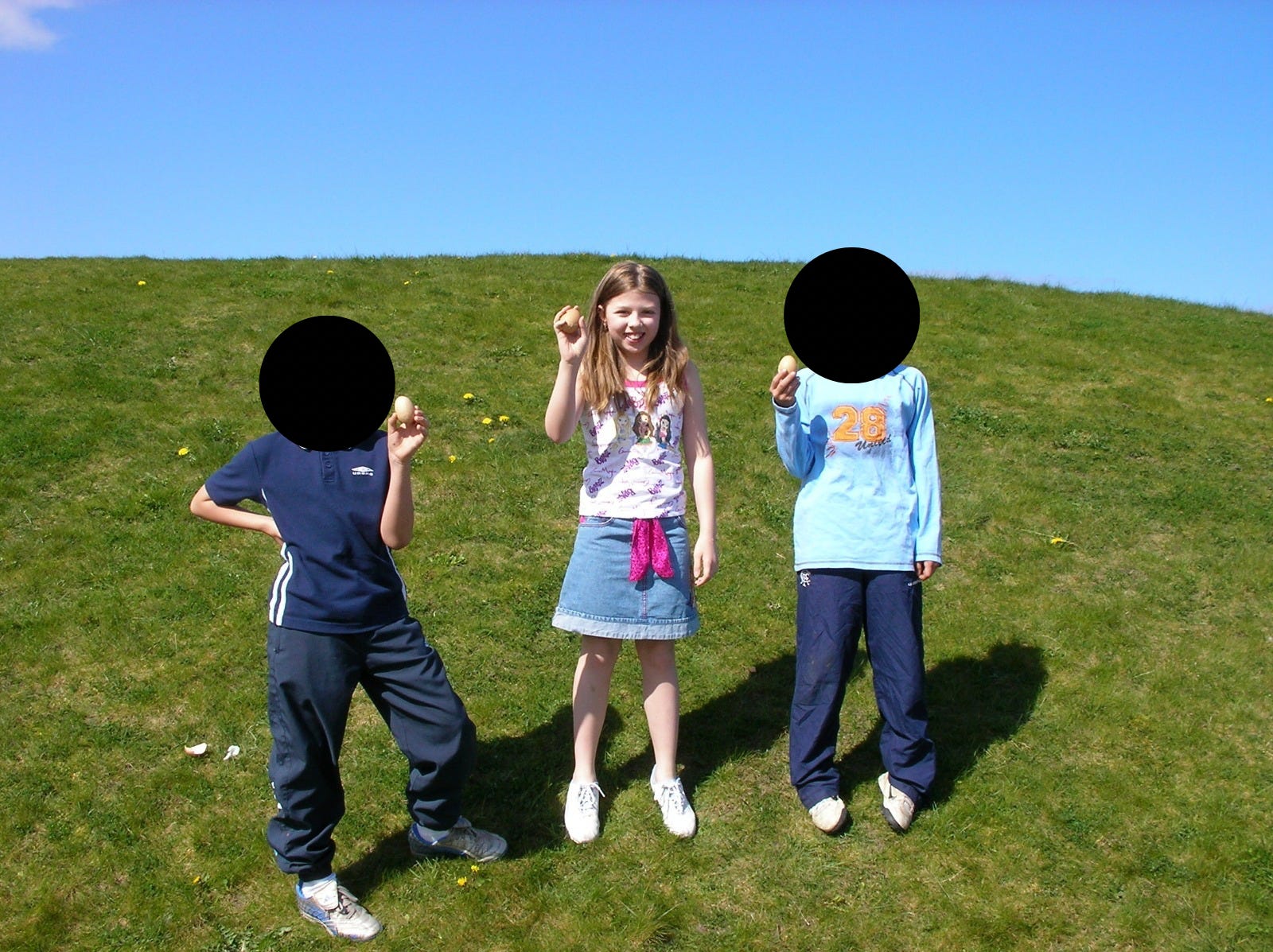
The image of rolling my egg down the knoll to reveal a perfectly green yolk was the first limb to grow. Then came the veins and the tendons. A poem without tendons is a sad lyric indeed. As for the form, I find that it controls me rather than the other way round. For Aberconwy Fable, it soon became clear that punchy and brief was its natural state.
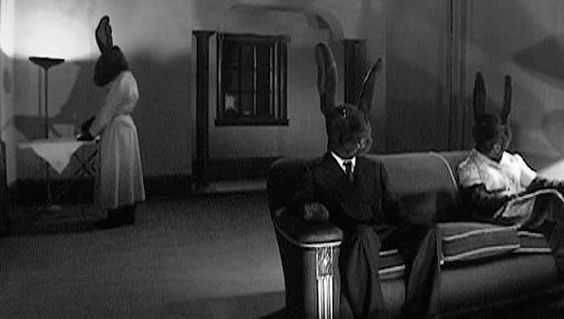
The memory of the egg-rolling engulfed the heart of the poem, which is a rather dark fable on mental illness. My opposing a pleasant memory with allusions of a severed head rolling down a hill illustrates the strict dichotomies of depression. With this in mind, it replays over and over like a horror film—almost Lynchian.
“When we drank the salt, a witch appeared on the mound,” speaks to a true paranormal experience we had one Summer evening. We (myself, my grandfather, and my cousin) were coming back from the beach that backs onto the caravan park when I had the strangest feeling. I have never felt such a strong urge to look left in my life. When I did, I saw a black silhouette of what can only be described as a witch. She had her arms outstretched like a mummy, and she was running away from something. Her feet were noticeably off the ground. Once I had recovered from the shock, I nudged my cousin who subsequently nudged my grandfather, and we all stood and stared. She ran into the public toilet just yonder of her and disappeared into a flash of light. When I retell this story, people often don’t believe me, but when I say three of us saw it (not that it should make a difference), they soon perk up.
Back at the caravan, my step-grandma was folding the laundry. We almost babbled our experience at her. It is one of my most memorable paranormal experiences I have had, and I am incredibly sensitive to the spirit world. Whenever I see my grandfather, we often go over this story. And if you’re still skeptical—or questioning the power of suggestion, I did not tell my cousin to “look at that witch,” I simply pointed in her direction. What skeptics don’t realise is that the human mind is capable of differentiating between what can be explained away (like a speck of dust or a reflection) and what is clearly something…other.
Literally I have included the experiences of being on the beach with salty water and the paranormal experience, but beneath the surface meaning, I’m the witch. Perhaps the salt symbolises experiences you thought you desired, but soon see they are bad for you. I daren’t pin this down precisely because the great part about poetry is analysis is that all interpretations are valid. When a poem is published, the author ‘dies’, meaning that their intentions rank the lowest.
While I usually employ beautiful language in my poetry, this piece is much simpler than my work normally is. The picture it paints is just as strong, but it is far more frank. With such strong memories, I think a poem can walk faster than one that is based in word play. The key to tying unrelated imagery together is to find a common ground. As the poem is based around Easter, I have included communion wafers and rainbows (like the stained glass windows of a church).
Beyond my intentions as a poet, the interpretation of the reader only elevates the work. Maybe this poem reminds you of Halloween? Or have you fallen in the sand? Poems aren’t plot twists: they can’t be ruined by understanding the original meaning. Personally, I find context enriches the reading experience, whether that be cultural context or personal.
In an interview, Sylvia Plath commented on her belief that one should manipulate a memory. Rather than writing the raw pain, she believed in dominating it lest it become unruly and get ideas above its station. This is similar to what I tried to do with Aberconwy Fable; in an almost Heaney-esque style. A poem based in memory I really love is Seamus Heaney’s ‘The Underground’ which I analysed for a previous Poetry Postmortem.
Overall, writing a poem has many working parts. They can take days, weeks, and months to create. Some come out perfectly formed—like the poem—and others can take a bit of working out. Poetry is a kind of magic, a kind of ritual.
“Just imagine if a sonnet went off accidentally.”
—Sylvia, dir. Christine Jeffs

 Courtenay's Corner